Showing posts sorted by relevance for query variation cards. Sort by date Show all posts

Friday, July 13, 2018

Inspiring Creativity in Piano Lessons with 20 Variation Cards


When motivation for playing piano was waning for one of my students after a busy day, I pulled out these variation cards and it was definitely a game changer! Not only did he have a new excitement about learning his new piece, but I was able to assess his knowledge and teach some theory and technique skills in a lively engaging way that drew him in asking for more.  He wanted to complete the entire set of cards!
Instead of playing the "What Changed" game, that I blogged about on this previous post, I instead used the variation cards as a springboard of ideas for the Variation Practice Challenge.

Piano Variation Cards

My variation cards simply include a basic idea for varying the song with an image to represent the change.

Melody Variations

Scrambled Eggs- Mix up the Melody
drawkcaB - Play part of the melody backward

Monday, October 5, 2020

Composing Variation Cards Free Printable

Teaching composition and improvisation can be a tricky task for teachers who have the typical classical piano training background.  But with Variation Cards, you can easily guide students along in the process of creativity by having them "borrow" elements from their pieces and change them up to create new compositions with a similar style but added flair.

Here's a sample of a quick variation I created using the theme from Hot Cross Buns.  The Haunted House, Beetle Bug, Backwards and Scrambled Eggs variation cards that I use definitely add more interest, and starting with something familiar adds a safety net for the student to begin with if they are a bit timid about composing from scratch.


Teaching Composing and Improvisation with Variation Cards

Having students create impromptu variations of folk tunes like Mary Had a Little Lamb or Twinkle Twinkle Little Star can be a fun way to spark interest at the beginning of lessons, but I also like to have students choose a few variation cards to apply to the pieces in their method books on a regular basis once they have learned the piece. 


Saturday, September 9, 2023

Piano Adventures 3B: Gypsy Camp and Contrasting Moods

 This post includes lesson plans for "Gypsy Camp" in Piano Adventures 3B.

Music Sample

Listen to Gypsy Camp as you follow along in your music. Choose a creative label for the 2 contrasting sections in this piece.


Wednesday, November 28, 2018

Tips on How to Begin Arranging Music: Notes from Jason Lyle Black Workshop

Creativity involves breaking out of established patterns in order to look at things in a different way. - Edward de Bono
Inspiring my students with some Jason Lyle Black videos is just one of the many tools I have used to encourage my students to break away from the written page from time to time and try something different.
Tips from Jason Lyle Black on how to begin arranging music for piano students and teachers

Monday, February 16, 2026

Music Terms Rap and Games

This month our piano studio focus is theory, terms and signs. I love finding fun ways to teach music terms to piano students!

I have used many engaging activities like Quizlet matching games, music theory art, Musical Headbandz and Split Second, and Piano Cranium


Music Dictionary Rap

But this month I'm starting out one of my group lessons  with this Music Dictionary Rap from Piano Adventures Gold Star.


Music Flashcard Game Variation

Typically my students start out lessons with a quick game like music term memory match. Instead of playing this typical memory style with cards face down, to introduce relatively new terms and signs I first play a face up version. I like how this variation combines both skill and an element of chance so that any player can win. If the teacher is playing with the student, I even the playing field a bit by saying the teacher doesn't get to "steal on sixes" because they have an unfair advantage of already knowing all the answers. 

Divide the cards into 2 piles, one pile for the term or symbol and one pile for the matching answer.
Shuffle the cards and place them face up. 

Students then roll a die to determine how many cards they get to collect by guessing the sets of cards that are a match. 
If they roll an odd number (1,3, or 5) they guess just one match. 
If they roll an even number (2 or 4) they guess two matches. 
If they roll a 6 they get to steal a match from the opponent of their choice. 
The winner is the player with the most card matches at the end.

Related Posts

Split Second Music Theory Game

Musical Cranium


Friday, July 14, 2023

Tools for Composing Melodies and Free Printable Melodic Motif Bingo


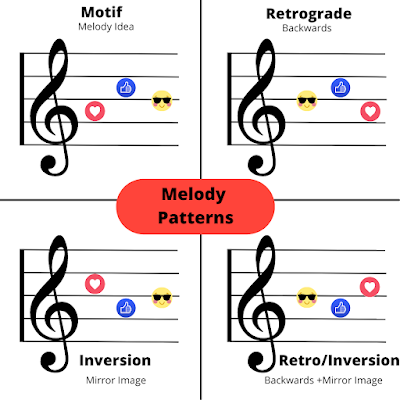
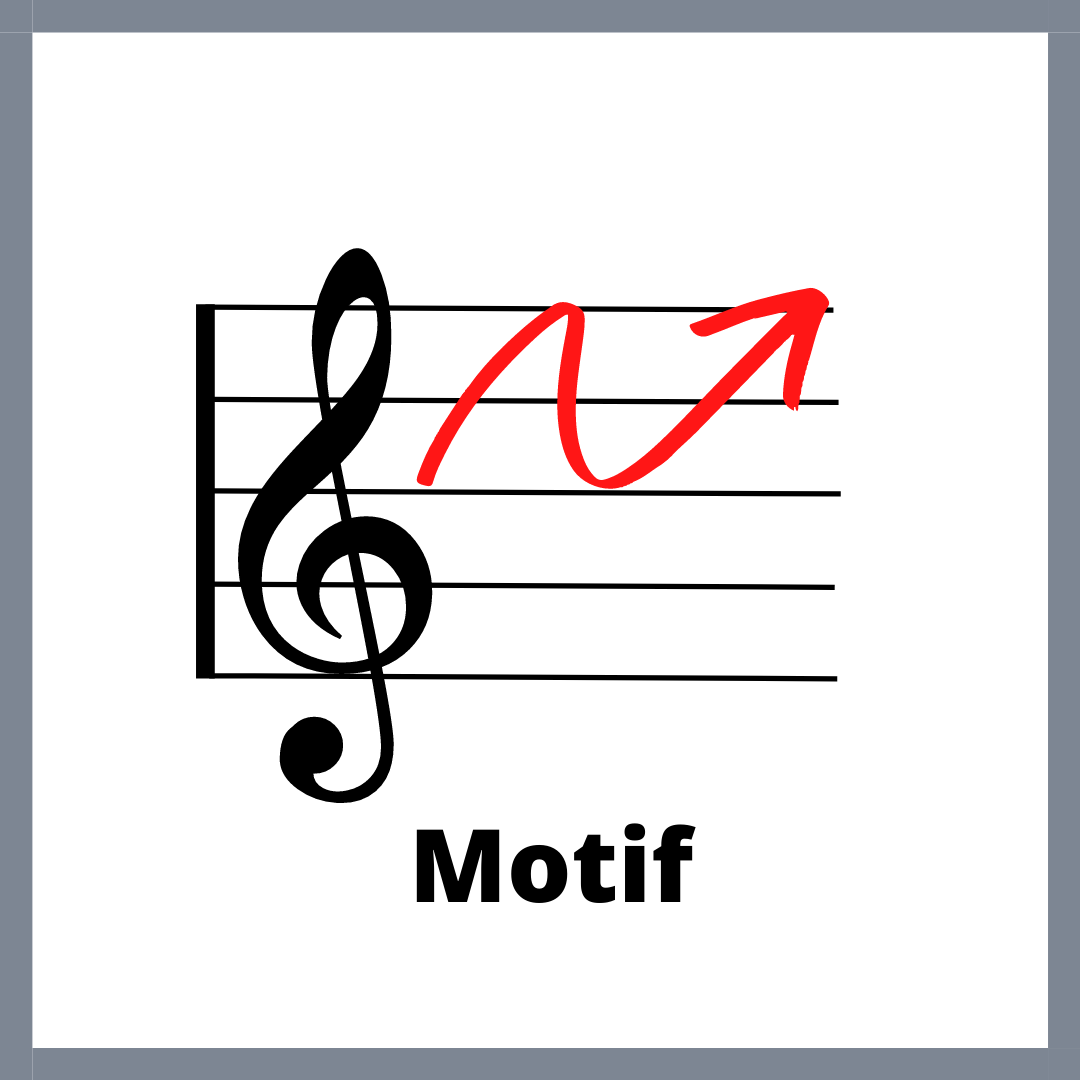
Musical Motifs

Memorable melodies often use repetitive variations of a short musical idea or motif. Using these same tools as you compose melodies can help you develop a musical idea into a longer interesting piece with a common idea woven throughout. 


Friday, February 1, 2019

12+ Months of Free Music Group Lesson Plans

teaching piano free piano group lesson plans heidispianonotes piano group activities

Planning Piano Group Lessons

Choosing a monthly focus topic for piano lesson not only simplifies lesson planning, but it also helps me ensure that students are getting a well-rounded exposure to musical concepts that can easily be overlooked like composition and ear training.

Wednesday, July 2, 2014

Part 6: Teaching Rhythm Through Song


4 Creative Ways to Improve Rhythm Through Song
1.  Add lyrics to sing to wordless songs or tricky rhythm passages
Caterpillars and Spiders= Rhythmic Success!
Recently my son was learning struggling to accurately play the eighth note rhythms in "Theme and Variation" (Piano Adventures Performance Book 2A).  I sung some impromptu lyrics to help fix the problem.
In contrast to the steady quarter note theme ("A spi-der bit my nose----- off")
the variation changes to eighth notes ("A cat-er-pill-ar bit my nose----- off")
Singing lyrics that matched the rhythm fixed the problem immediately and the quirky lyrics made the rhythm unforgettable. "A caterpillar bit my nose off, than a caterpillar bit my toe.  I think I want to make some caterpillar stew.  Would you like some stew too?"
Although I also teach numeric counting as well (4, 1+,2+,3 4, 1-2), for many students adding lyrics to match the rhythms is much more effective.   Suzuki style "Pepperoni Pizza" scales, Piano Safari "Zechariah Zebra" Technique Songs and the Piano Adventures 2A "Famous People" piece that pair rhythm with familiar words are powerful tools to aid in rhythm development.


2.  Encourage rhythm compositions introducing the sounds of rhythms before they encounter them in their music.
Layton Music Candy Bar Rhythms - Challenge students to compose a Candy Bar Melody using all of the candy bar rhythm cards.  The lyrics for me would be something like this "My favorite candy is not Butterfinger, Nestle Crunch or Reeses Peanut Butter.  Twix and Milky Way both taste great, but I like Snickers best!" I'll have to admit that my less creative compositional mind keeps on reverting to the tune of the "Old Gray Mare."


Or you could try a variation to match the interests of your students
Animals: Bear(quarter), Lion (2 eighths), Alligator (4 sixteenths)
Bugs: Bug(quarter), Bee-tle (2 eighths), Cat-er-pill-ar (4 sixteenths) (Let's Play Music)
Pies: Mince (quarter), Ap-ple (2 eighths), Hu-ckle-ber-ry (4 sixteenths), Rasp-ber-ry
Candy Bars: Twix(quarter), Snick-ers (2 eighths), Butter-finger (4 sixteenths) Layton Candy Bar Rhythm Cards
Another great resource is the Teach Piano Today "Trash to Treasure" Composition activity.

3.  Teach Rhythm Names through song.
Songs can also serve as a mnemonic device to help students remember the names of notes and rests.
Note Names - Piano Adventures Primer "Quarter Note"  It's got a head and a stem and its all colored in.
Rests - Music k8.com Give it a Rest  

4. Spice up (Boring) Scales by Singing and Playing Rhythm Variations
Instead of playing a 1 8va ascending scale with quarter notes, challenge students to play a "Twix, Snickers, Butterfinger, Twix"  or "Caterpillar, Bug, Beetle, Bug"variation.  The possibilities are endless with a little imagination.

Related Posts:
Post 1: Teaching Basic Keyboard Concepts Through Song
Post 2: Teaching Technique Through Song
Post 3: Chord Progressions and Transposition
Post 4:  Ear Training Through Song
Post 5: Theory and Tempo

Thursday, November 1, 2018

Creative Keys Workshop with Leila Viss: Creativity

FINDING TIME TO BE CREATIVE
Creative Piano Teaching


“Creativity is recombining elements that already exist in a new way.” – Wendy Stevens
Piano lessons for me as a child followed the traditional format of playing from the printed page, receiving feedback, and practicing it again until I got it right.

Friday, March 30, 2018

Composition 101: 5 Avenues to Begin Composing


Which is better creativity or conformity?

For a person who likes the comfort zone of predictable instructions, checklists and rubrics to measure progress, conformity is definitely the easier path, so embarking on a new adventure of preparing students for a Composition Festival this year was an intimidating challenge for me. I tapped into a lot of resources and discovered that there are a lot of different paths that lead to the same destination.

As I led my students through the process of creating their own pieces I was amazed at the many layers of learning this project created as they applied rhythm dictation, fingering choices, time signatures, dynamics, form and note naming. The best part was that my students were so motivated to apply these rules of "conformity" because they were passionate about their compositions. Following is a roundup of links that can unleash the creativity and get the juices flowing in a variety of ways.

Tuesday, November 28, 2023

Christmas Piano Group Lesson Plans 2023

I was reminded last week at an interesting webinar by Paul Harris about Sight Reading Skills that audiation, pattern recognition, improvisation and key signature awareness are some of the fundamental building blocks that sharpen sight reading skills. 

This month at Christmas group lessons we'll be reviewing arpeggios and practicing ear-training skills with some Christmas carol activities that require audiation (hearing music in your head).

Christmas Rhythm Dictation

I like to pair the Do You Hear What I Hear?  activity with some mini m&ms and beat boards so students can use tactile objects to represent subdivisions of the rhythm patterns. 

Elementary: Quarter Half and Whole Notes

Late Elementary: Quarter Half, Whole and Eighth Notes

Early Intermediate: Quarter, Half, Whole, dotted Quarter and Eighth Notes

Intermediate: 6/8 Time Signature: Eighths, Dotted Eighths, Quarters, Dotted Quarters

Carol of the Bells Improv

This classic Christmas piece is a student favorite! The repetitive rhythm can stick in your mind for hours but also makes a great springboard of ideas for improvising.

Elementary: Follow Directions on Carol of the Bells Improv Sheet by Chrissy Ricker

Late Elementary: Guess the Theme and Variation Card used as you listen to musical excerpts played by the teacher

Intermediate: Create Your Own Variation Using at least 3 Theme and Variation Cards. You can learn more details about some possibilities like Carol of the Scales, Lullaby of the Bells or Carol of the Pirates on my earlier post about Composing and Improvising: Free Resources for December.

Name That Tune Christmas Edition

The free printable Christmas Jumbles and  Christmas Name that Tune Sightreading pages by Chrissy Ricker also make great audiation practice as well. Can you name or unscramble the tune measures by looking at the notes and hear the music in your head without playing it?

Split Second is a fun game I picked up from the thrift store and repurposed for music lessons. Students race to write their answers on their paddles and earn points for correct answers and speed using samples from this YouTube Name that Christmas Tune collection of carols.


Take Home Transposing
At group we will try a short sample of the Jingle Bells(Elementary) and Deck the Halls(Intermediate) Transposing Challenges to apply prior knowledge of 5-finger patterns and intervals.

Monthly Challenge
For this month's bonus challenges students can complete the Arpeggio Challenge, Chrissy Ricker Transposing Challenge or Create their own Improv/Arrangement of a Christmas song to earn a bonus prize at lessons.

Related Posts

Wednesday, August 5, 2015

Technique Pattern Bingo


To top off our quest for creative composition last month we ended the month with a some fun group lesson games.  After completing the opening scale pattern coloring page and playing a fun game of Mystery Food Improv,  I came up with a technique pattern bingo game to solidify students recognition of the names and patterns in their keyboard skills exercises.  It is a quick game that could also be used as a fun lesson starter during private lessons.

Tuesday, October 26, 2021

Steps for Playing from a Lead Sheet- Christmas Piano Music

Playing music from a lead sheet opens up a new world of possibilities so that you can make familiar tunes have their own special flare.

Free Christmas Lead Sheets

These free Christmas lead sheets from Michael Kravchuk allow pianists to practice chords or prep to accompany a Christmas sing a long. Starting with the key of C is definitely easier for a beginner pianist, but playing in other keys can sometimes make it easier to sing along. Here are a few familiar favorites I like to star with but there are over 30 to choose from on MichaelKravchuk.com with options to select from multiple keys for each song.

Friday, October 30, 2020

"I Am Thankful" Piano Composing Project Steps

I Am Thankful Piano Composing Project, Thanksgiving Piano Composing


Composing at the piano can seem like a daunting task for beginners, but with small and simple guided steps, it can be a success for even young beginners. For November piano lessons, students in my studio are creating an "I am Thankful" Composition using the step by step approach below.

Saturday, November 30, 2024

Wunderkeys Pop 2: The Ninth Session and Creating Variations

Wunderkeys Intermediate Pop 2 Performance Piano Book, Teen Intermediate Pop Piano Music

The Ninth Session in B-flat Major is a spinoff of Beethoven's classic Ode to Joy Theme with left-hand syncopated interrupting eighths that sound a bit like the Forrest Gump Theme.

  • Tap along with the rhythms as you listen to the performance to prep for the syncopation in the intro and outro.


Thursday, April 25, 2013

Lego Rhythm Construction Game

I started using legos in my studio a few years ago help solidify rhythmic concepts with my students after reading this Lego Rhythms post by Jen at pianimation.com.  Some of the boys really thrived with this manipulative.  So after a quick activity at private lessons to review how to build rhythms using legos, we played a fun game at group lessons.  With all of the excitement I forgot to snap some photos... but here is a snapshot of 2 measures in 4/4 time "constructed" with legos so you can visualize what a lego measure looks like.
Lego Rhythm Construction Game

Monday, November 20, 2023

Composing and Improvising: Free Resources for December

December is such a perfect month to inspire imaginative creating and composing!

Free Piano Composing and Improvising Ideas for December, heidispianonotes, piano teaching

Piano students are eager to play their favorite Christmas songs and this provides a perfect springboard for ideas as they arrange, improvise or even compose music that creates the magical feelings of snowfall or Christmas wishes and giving. Which one will be your favorite?

Tuesday, October 31, 2023

Composition and Improvisation Free Resources for November

Elementary Level: Thankful Composing

I love finding a seasonal piano activity that I can use with all of my students at the same time. It definitely simplifies lesson planning!  

The simple "I am Thankful" fill-in-the-blank free printable composition created by Kristin Yost can be used by young beginners, but it can also be expanded into a more difficult project for more advanced pianists or other instrumentalists.

Friday, June 14, 2019

What Happened at Prospective Student Piano Camp? Plus More Fun and Games


This week at piano camp the activities that students sampled were based on the 4 Arts of Music: Improvising, Reading, Arranging and Composing (see Forrest Kinney article)  This pedagogical framework in piano instruction enables students to become more expressive and creative at the piano as well as entrenching a solid understanding of the reasons behind the organization of the music they read on the page.

Improvisation
We started out with a simple improvisation duet on the black keys (key of F#) using the MusicClock app as a backtrack.